Wednesday, 12 July 2017

The Best Destination For Music


In a world that is becoming increasingly smaller through travel and the electronic media, music is the universal language that crosses boundaries today with rhythmic regularity. It is as easy to find an excellent old-time Dixieland jazz-club in Shanghai as it is to find a Cantonese pop-music concert in London, and there always seems to be an African dance presentation going on somewhere in Berlin just as classical Western music performances seem to be available in Singapore at any time of the year. Exquisite Spanish-guitar virtuso performances can be heard throughout the Philippines, and authentic Indian dance-performances proliferate off the African coast, on the island of Mauritius. Various cities across the globe have their own distinctive music festivals and the avid music-tourist is often overwhelmed with choices.

Experienced globe-trotters and savvy travel-professionals, however, point to just one country if asked to identify a tourism destination that is defined by music more than anything else. It is a country with superb classical architecture, stunning scenery, fascinating cuisine, some very good wines, great sports facilities - and oh yes, sublime local coffee! It has an air-hub par excellence, and both road and rail infrastructure to equal any place in the world - yet all these winning tourism features are overshadowed by the sound of music. This is Austria, the country that enchants visitors with auditory delights like nowhere else on earth.

Tourists from all over the world flock to Austria to tramp the paths and film-locations where the screen Von-Trapp Singers immortalised The Sound Of Music, and soak up the melodies of Rodgers & Hammerstein. They visit the birthplaces, homes and old haunts of great Western composers such as Brahms, Mozart, Hayden, Schubert, Schumann, and Wagner. They relive the glories of these great musicians, and luxuriate in the timeless melodies.They witness performances of Strauss and Strauss, and thrill to the wonder of the fairy-tale Viennese Waltz. They watch the cherubic faces of the Vienna Boys Choir and revel in the purity of those incandescent voices. On these great musical attractions alone, any nation could have a dynamic and world-class tourism industry. But Austria has much, much more to offer!

There are the often overlooked genres of traditional Austrian music such as Old Farmhouse, Schrammel and Alpine, each with their quintessential Austrian distinctiveness and allure. There are the evocative melodies of neighbouring countries such as Hungary, Slovenia, Slovakia and the Czech Republic as well as other nations in and around the Danube-Danau region. There are festivals dedicated to a single instrument, and these can include anything and everything from the Gypsy Accordion to the Australian Didgeridoo. Austria also hosts events celebrating jazz, opera, tango, new folk, and even Brass Band - the latter attracting participants from at least 15 nations around the globe.


During a single visit to Austria in early 2009, I picked up an events-magazine and read publicity for performances of Contemporary music such as Cabaret, Café’ Concerts, Electronic, Funk, Hip-Hop, Jazz, Opera, Operetta, Pop, Rock, World Music and Funk Mundial, the cosmopolitan electronic Brazilian-styled dance rhythms. There were also performances of International music from places as diverse as the Balkans, Ukraine, Egypt, Spain, Texas(!), New York’s Harlem, Serbia, and various parts of Asia. Salzburg’s Summer Scene had Indian Classical music among its offerings, and Vienna’s Volksoper was staging Chinese Opera. And we haven't even started to talk about the glorious Christian Sacred Music that I personally find inspiring and rejuvenating...
Yes, music permeates the very fabric of Austria - it flows down its Alpine brooks and swings through its concert-halls with exhilarating freedom and diversity. Music defines much of Austria's history, and energises much of its present-day life. And for the intrepid tourist, it makes Austria The Best Music Destination In The World.


All images courtesy of Austria National Tourism Organisation
© Österreich Werbung / Trumler, © Österreich Werbung / Fankhauser, © Österreich Werbung / H.Wiesenhofer
© Österreich Werbung / Wiesenhofer

Saturday, 12 March 2016

The Best Airline Re-Branding

Over the last four decades, we have had the opportunity to participate in or observe the rebranding of numerous airlines. Some were given a new identity because of new management or new marketing strategies, while others were re-branded because of new ownership or the merging into an airline group.

In the first category are case-studies such as JAL to Japan Airlines, Air Lanka to Sri Lankan, and Air Pacific to Fiji Airways. The national airline of Japan actually retained its name, but after 10 years with a modernistic non-descript use of its initials, it chose to revert to its original logo featuring its full name. In traditional Japanese culture, the red-crowned crane (Grus japonsensis) is viewed as a symbol of long life, and it is a powerful and effective symbol of how Japan uniquely cherishes ancient culture in cultivating an ultra-modern lifestyle.

Image result for DragonairThe list of airlines re-branding under a larger group is very long, but to us, the most successful of these is the metamorphosis of Dragonair to Cathay Dragon, joining its sister-carrier Cathay Pacific in a stylish new simultaneous re-branding.
We believe The Best Airline Re-Branding is of Dragonair to  Cathay Dragon because it brings the healthy and growing carrier into an elegant and effective equal-partnership within the Cathay Pacific group. Each airline has an equally elegant livery of almost identical application, but in complementing different colours.

The new livery of Cathay Pacific and Cathay DragonIn 2006, Dragonair became part of the Cathay Pacific Group, and the two airlines have worked in increasing closeness to provide a synergy of connectivity and service from Hong Kong to about 200 destinations in mainland China and the rest of the world. It makes sense, therefore, that the new name deftly brings Cathay Dragon into the family while retaining its distinctive identity. The new livery of both airlines has been designed to align them more closely with each other, and we like the integration of that iconic Cathay Brushwing on the tail of all aircraft within the Group while maintaining a little updated version of the original Dragonair logo on the nose of Cathay Dragon aircraft.
The new hues are also distinctive and attractive – stylish with an understated dignity.  Overall, the new Corporate Identity of Cathay Dragon is clean, elegant and effective – well-deserving of our award for  The Best Airline Re-Branding.

Photographs by kalid.com.cn and Cathay Pacific Group

Sunday, 17 January 2016

The Best Safari Destination

When I was very young, Africa burst upon my imagination with the debut of the blockbuster movies Hatari! and Born Free which brought the grandeur of the African savannah to us in larger-than-life Technicolor wide-screen, complete with stirring music and often unscripted drama from the animals. Add a good dose of Tarzan books, and I was completely enamoured with the whole adventure of an African safari.
When preparing for my first visit to Africa, my mind was racing with questions. Was the legendary savannah still unspoilt? Would it be as grand as or even greater than what I saw on the screen? Were the numerous TV documentaries reflective of the true situation? Would I actually get to see many wild animals? I soon found out that the answer to each and every question was a resounding Yes. The fabled natural habitats of Kenya remain green, clean and vast – far greater in scope and beauty than anything the silver-screen could convey. And as for wildlife, nothing could have possibly prepared me for what actually happened.

 From herbivores like the African Elephant, Cape Buffalo, Warthog , Masai and Reticulated Giraffes, Burchell’s Zebra, Scrub Hare, Hippopotamus and White Rhinoceros to carnivores like the Lion, Cheetah, Hyena, Jackal, Wild Dog and Leopard, mammals could be seen at close quarters from the open-sided jeeps that cruise the vast natural habitats of Kenya.
Of the antelope or deer genus alone, we saw large numbers of Impala, Grant’s Gazelle, Thompson’s Gazelle, Topi, Wildebeest and Common Waterbuck, while also managing to spot less common species like the Hartebeest, Bushbuck, Defassa Waterbuck, Bohor  Reedbuck, the tiny Kirk’s Dik-Dik and the enormous cow-sized Eland. Omnivores like the Banded Mongoose and Baboon helped us notch up a list of about thirty magnificent mammal-species of all shapes and sizes in the four days we were on full safari in different parts of Kenya. The highlight of the trip was an accidental once-in-a-lifetime close encounter with an enormous lion!

Since then, I have travelled across various parts of Africa, and seen some amazing sights. But for the Best Safari Destination in my experience, it has to be Kenya – by far.

(All photographs by Andrew Ponnampalam)

Monday, 11 January 2016

The Best Australian Destination For Sign-Power!


When travelling around the world, it is essential to read the signs carefully. In a foreign country, directional signs, security information, place-names and even warning notices give you a sense of place, and a certain measure of comprehension; which in turn creates enough confidence to move on to the next leg of your journey. In one particular destination, however, I found that the signs around me became a major attraction of their own!

They inform, they direct, they attract, and they entertain - all by themselves. Strictly policed and stringently controlled, they still manage to exhibit exuberance and glee as they stand outside and do their daily duty in rain or shine. "They" are the signboards of Queensland - or more specifically, that part of the state from Brisbane to the Gold Coast. Ignore these signs, and you may be stuck with the stereotyped touristy trip, and miss out on the best things the region has to offer. Stop, look, and appreciate them fully - and you will transform your holiday into an enchanting experience of local passion, beauty and dedication to excellence. These signboards will lead you into a wonderful world full of local colour, humour, enterprise - and most importantly for serious shoppers - outstanding products of exquisite finesse, great value, and solid quality.

The first group of signs that caught my eye were neither stylish or colourful. In fact, they were downright grubby, rough and weather-beaten; just like the ramshackle old shop they fronted. "MICK'S NUTS", the first sign proclaimed very loudly and rudely. "Macadamia Shop", called another, in vivid red on white. The third sign in the motley crew was the clincher. Nearest the door, it pulled me in irresistibly : "NUTS SHOP. Australian Pesticide-Free Almonds". Now, if that did not tantalise the taste-buds, what would?
Entering the low-ceilinged store was to enter a magical kingdom of nuts and cousins. Almonds, brazil-nuts, cashews, chestnuts, hazelnuts, macadamias, peanuts, pecans, pine-nuts, pistachios, walnuts - every nut in town seemed to be there save the coconut. Roasted or toasted, salted or spiced, sliced or diced, cooked or raw - if it was edible, it was on sale. And all related foods were there as well, in Mick's Nut Shop:- raisins, sultanas, prunes, pulses, sunflower kernels, watermelon seeds, pumpkin seeds, tiny sesame seeds, and dried fruit like figs, apricots, bananas, apples - everything you'd want for a healthy, fibre-rich Mediterranean-style diet. Standing at the same location for over twenty years, this family-run shop has become something of an icon in Brisbane's West End neighbourhood, with the same warm Greek hospitality of its second-generation owners, who greet the regulars by name.

Hospitable was not the adjective that came to mind when I saw another sign in the lush green environs of another intriguing destination. "ENTRY RULES" it stated ominously. "Coach or Tour Groups Not Permitted. No Pedestrians. Small Vehicle Groups Only." The white-bearded gnome-like owner was unapologetic. "Coach Tours? Bah! Humbugs, the lot of them! If it was legal to shoot 'em, I would, the bludgers! Driving in here, posing for photographs, knocking off free samples, and then turning tail and leaving without spending a single penny!"
This was my introduction to the 'legendary' Michael Ward of Mount Tamborine:- raconteur, orchard farmer, avid environmentalist and co-owner of the award-winning Tamborine Mountain Distillery, widely-known as "Australia's Most-Awarded Distillery & Liquor Brand In the New Millennium", as its website modestly proclaims. Whatever the case, discerning connoisseurs from all over the world clamour for the award-winning fruit liqueurs, schnapps, vodka, absinthe and other fine spirits produced by this small family of dedicated distillers.

Elsewhere on Mount Tamborine is what could be the world's fastest signboard - the gaudy-liveried Lotus racing-car that is usually parked in a strategic spot to advertise two special businesses owned by a glamorous young couple : Mount Tamborine Brewery and Witches Chase Cheese Company. The first combines traditional brewing methods with ultra-modern equipment to produce award-winning beer while the second is an artisan boutique cheese factory that hand-creates internationally-acclaimed cheeses using old-fashioned recipes, the finest french cultures, pure vegetarian rennet, and fresh local milk. Together, these two companies make a fascinating stopover for visitors.

Rather more sedate is the amphibious vehicle that is a mobile advertisement for the exciting Aquaduck Tours. One moment, you are trundling along the traffic-clogged main thoroughfares of the Gold Coast - and the next moment you are chugging across the sea, dodging buzzing speedboats and elegant yachts while enjoying a panoramic view of the nation's most expensive and exclusive waterfront properties. Families with small children will enjoy this unique experience as the young ones get invited up to the captain's cabin to 'steer' the vessel across the waves before it transforms back into a street vehicle on dry land.

Leaving the cartoon Aquaduck mascots behind, visitors to Queensland are invited to 'Get Closer' to real birds and animals at the Currumbin Wildlife Sanctuary, the region's leading native wildlife experience in a coastal rainforest setting. The clever graphics and wry local humour on the signboards all over this interactive zoo really help visitors enjoy the full benefits of the exhibits in the extensive natural surroundings. With hundreds of native Australian birds, reptiles and animal, Currumbin Wildlife Sanctuary has been awarded Ecotourism Australia's Advanced Ecotourism Accreditation.

If furry or feathered creatures aren't enough for you, what about bees? Bee-watching is a legitimate pastime, according to the signboard at Mount Nathan Winery. A labour of love for three generations of the Gibson family, the panoramic property consists of vineyards, apiaries and a plantation of Paulownia trees. The winery produces lovingly-created red and white wines, while the bee-hives among the Paulownia trees provide the finest honey. Paul Gibson also produces superb mead, honey-based liqueurs, muscat and fortified wines. A visit to the scenic estate would not be complete without a walking-tour and purchase of these excellent products, which will then be specially bubble-wrapped for you to take home safely on your return flight.

Honey-based products can also be found along the vibrant and fascinating Gallery Walk in Mount Tamborine, with its colourful and eye-catching signboards advertising everything from Granny Mac's sinfully-delicious home-made fudge and the rustic German Cuckoo-Clock House, to the intriguing Totally Different handicraft house and the enchanting Fairies On The Wall. Now, to find out what that last sign is all about,
you will have to follow the signs in Queensland,
and discover the best things in life for yourself!


(All photographs by Andrew Ponnampalam) 

Saturday, 9 January 2016

The Best African Kingdom For Craft

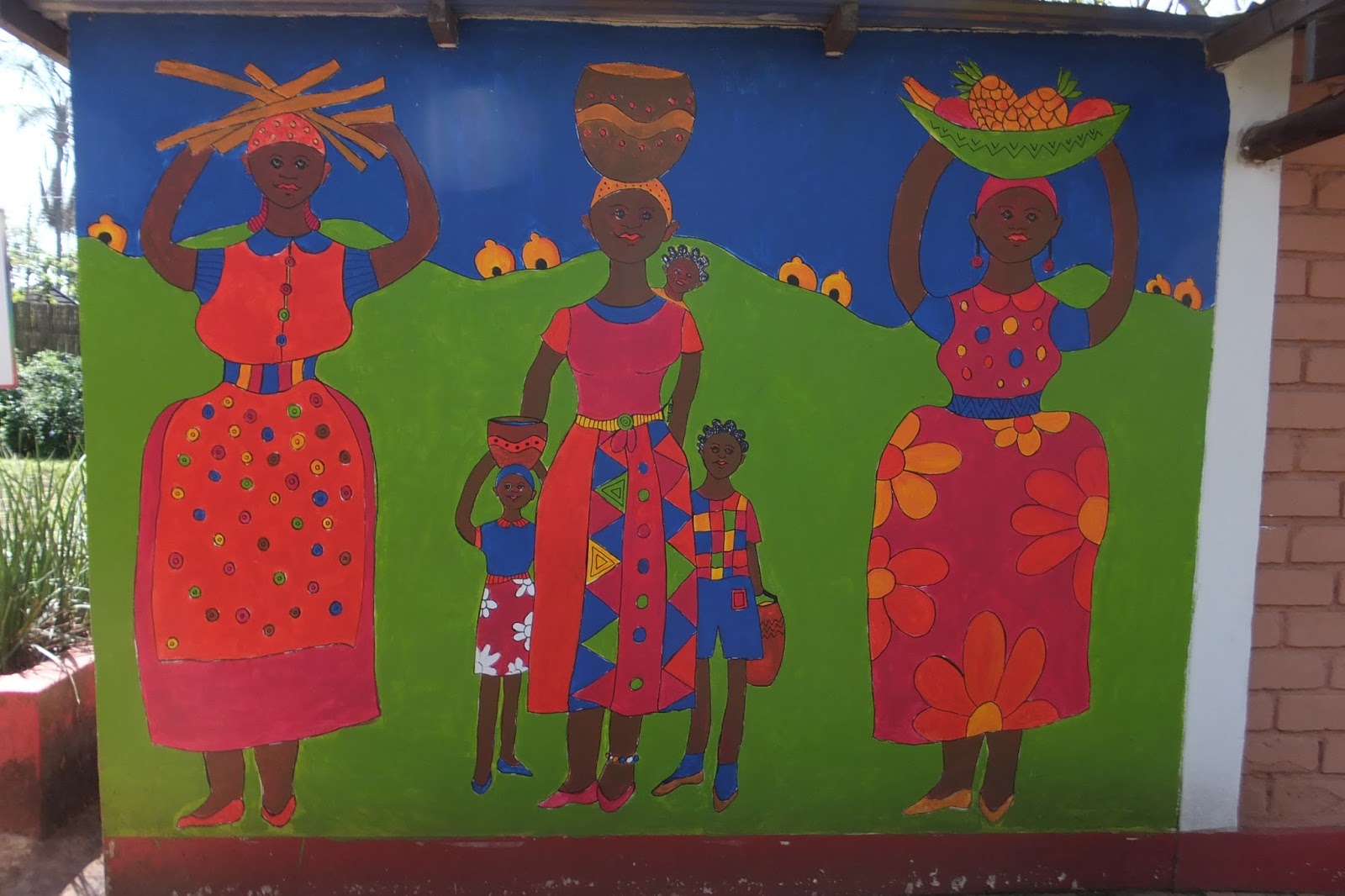
In an age when tourist-destinations from America to Africa hawk souvenirs stamped "Made In China", the small kingdom of Swaziland impressed me with its remarkably authentic range of traditional arts and crafts. I was intrigued by the various Crafts Markets in various parts of the country.  Best of all, many are socially-responsible enterprises which provide both income and empowerment for their craftspeople from poor rural communities. This is something very exciting and exemplary, and it places Swaziland high on the list of "authentic experiences".

Bhembe Art
We had the opportunity to visit a little Craft Workshop run by a local sculptor who is well-known in the local communities for his art and social-work. The guide informed us that this man trains young people from disadvantaged backgrounds to earn a living through wood-carving and art. Their works of art and sculpture encompass both the traditional and modern whimsical, and are distributed through the established craft-markets around Swaziland.      
This is an excellent community-empowerment project that produces authentic home-grown local products from the grassroots.

Swazi Candles Craft Market
Located about 7km off the main highway in the Malkerns Valley, this intriguing spot is a must-see for visitors, who can watch the actual craftsmen being engrossed in their work. Everything here is authentically Swazi and quite enchanting. There is actually a sizable collection of internationally-admired outlets showcasing the best of what the local communities have to offer, as well as a café, rest-rooms and other amenities for the travelling visitor.

The main attraction here is Swazi Candles, where the highly decorative candles are hand-made using an ancient Italian glass-making technique called "millefiore", specially adapted for the local hard wax. With this skill, it is possible to produce a brilliant kaleidoscope of vibrant colours that infuse the wide range of Swazi-themed candles that come in all shapes and sizes. Swazi Candles are now world-famous, renowned for their quality, creativity and sheer artistry.
   
Rosecraft Weaving's fashion and home décor accessories, Baobab Batik Handicraft that includes wall-hangings, cushion covers, bright kiddies’ products, and scarves, KwasiSwazi books, music, souvenirs, jewelry and T-shirts from Swaziland; Amarasti 's beautiful bags in various designs and sizes, painstakingly hand-embroidered and beaded by the Amarasti women who take great pride in their work, Sambane authentic Swazi souvenirs, Umgololo African artifacts, masks, sculptures, cloth and gifts; Swazi Sense handmade pure soaps, and Yebo Art & Design sells paintings, prints & sculptures by top local artists as well as Swazi textiles, quirky home decor, silver jewellery, ceramic crafts and a series of contemporary art postcards; these are just some of the attractions here.                                 
At the edge of the market is a solitary silver old Airstream caravan with a chalk-lettered sign saying Black Mamba –  this is a unusual shop selling a delicious, fiery selection of food-products including piquantly tasty sauces, pestos and pickles under the startling brand-name of Chilli Venoms®. All the sizzling goodies are made with organically-grown ingredients with no artificial additives.  There are also ‘hot’ and trendy t-shirts & accessories for sale here. A great place!
                                                                                                                   
House On Fire
Also in the scenic Malkerns Valley is the whimsical House On Fire art-complex, described by one European enthusiast as being ”One of the most eclectic art-and-entertainment venues in the world! House on Fire is a fantastical playground of imagination which captivates and inspires.” Another visitor says that “House on Fire is a surreal experience of childlike naïve art, proud traditional culture, funky contemporary music, and delicious wholesome home-cooking.” There is an indoor art gallery, an outdoor sculpture showcase, a souvenir shop, a cafeteria, a well-stocked bar, an amphitheatre and stage for world-renowned musical performances, and – quite quixotically - a children’s playground. When we visited on a hot afternoon, the place was rather quiet, but we are told it can get very crowded and exciting at night or during major art or music events.
  
Ezulwini Crafts Market
After hearing a lot about the Ezulwini Craft Market and the investment pumped in by a foreign country, I was a little taken aback to see long rows of ramshackle sheds with rusty zinc roofs lining a small muddy field. Brightly-coloured traditional fabrics and gaudy art-prints brightened up the otherwise dilapidated stalls. Sadly, they seemed to all sell similar products, and hardly a seller was in sight – they were all probably sheltering from the sun or taking a nap due to the slow business.  It seemed a great place for bargains and really authentic local products, many of them handmade with love and care.
SWAZILAND is a great destination for many reasons, but the arts and crafts are certainly one of them!
 

(All photographs by Andrew Ponnampalam)

Tuesday, 20 October 2015

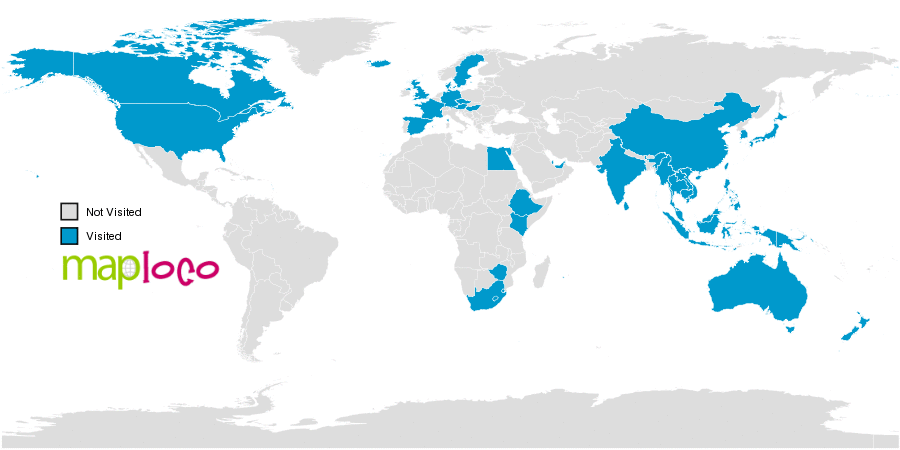
Countries Visited Around The World

answers! has covered over 7
00 destinations across 54 countries; 
more to come!

Tuesday, 4 March 2014

The Best Airport Railway Station

It is named after an intrepid pioneering aviator who is more famous for writing the most whimsical books. It was inaugurated in 1975, in an era of teleprinters, Morse Code and hand-signals – yet today it incorporates the most advanced cutting-edge technology of this millennium. It is connected by a futuristic high-speed train to some of the most modern and sophisticated cities in Europe, but you can also opt to leave this airport on the pillion-seat of a chugging motorbike-taxi. This is the enigmatic, contradictory Lyon-Saint Exupéry Airport - formerly known as Lyon Satolas Airport - an important transport-hub for the entire Rhône-Alpes region. While the airport itself is pleasant enough, its railway-station was the feature that caught our attention.

When we visited this iconic airport railway-station in 2008, it was looking a little dilapidated and in need of proper maintenance. Yet its dynamic architecture captured our imagination and lifted our spirits during the bleak winter season. Completed in 1994, the terminal was designed to represent the human eye, but looks exactly like a graceful swan alighting on earth and bowing low, with its wings raised in salute. The building's most striking profile, based on two converging steel arches 120 meters long and 40 meters high, is most obviously expressive of a bird, symbolizing flight with the two main arches coming together at the bird's beak. Architect Santiago Calatrava said that he never thought of a bird, but more of sculpture inspired by the shape of the human eye. However, the avian imagery continues inside the building where two concrete cantilevered balconies look remarkably like birds on the down-wing, rising up in flight.
Today, 2½ decades after its construction, Lyon-Saint Exupéry Airport Railway Station is still under-utilised and much of its sunlit cavernous space is largely empty. The superfast futuristic-looking TGV trains come in only a few times a day, and some of the lounges here are only used occasionally for special events. Nevertheless, its inspired architecture, dynamic vision, practical convenience and untapped resources make this our favourite Airport Railway Station in the world. To bring this facility to its full potential will require innovation, imagination and industry – the very same qualities that were put into its design in the first place!


Pix courtesy of Maison De La France (Southeast Asia) . 1: © Lyon Tourism & Conventions 2: © JF Marin / Aéroports de Lyon